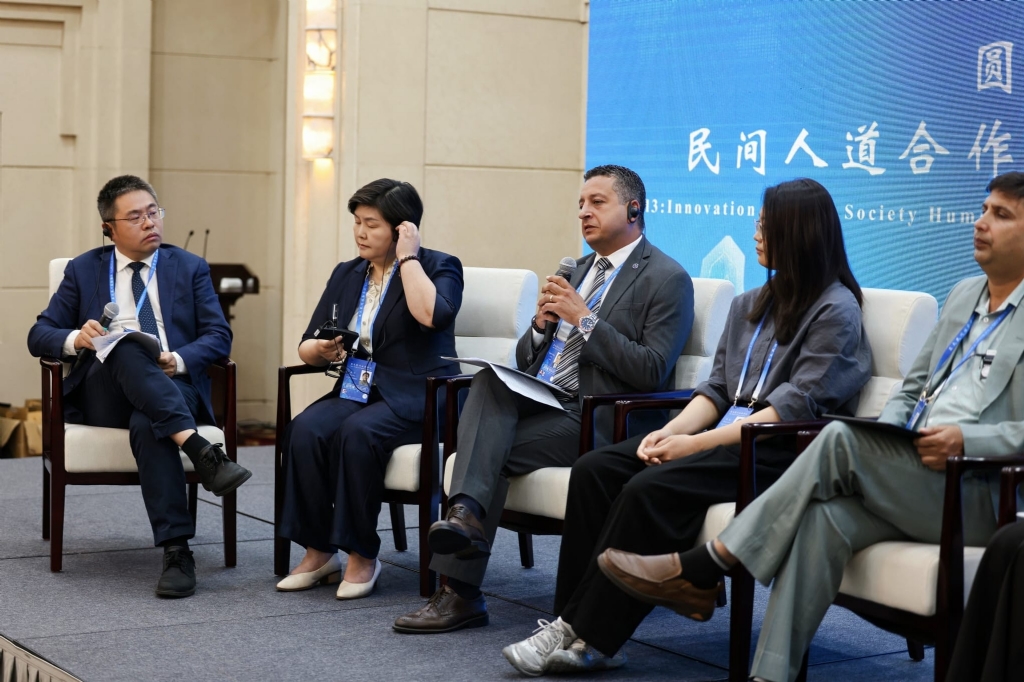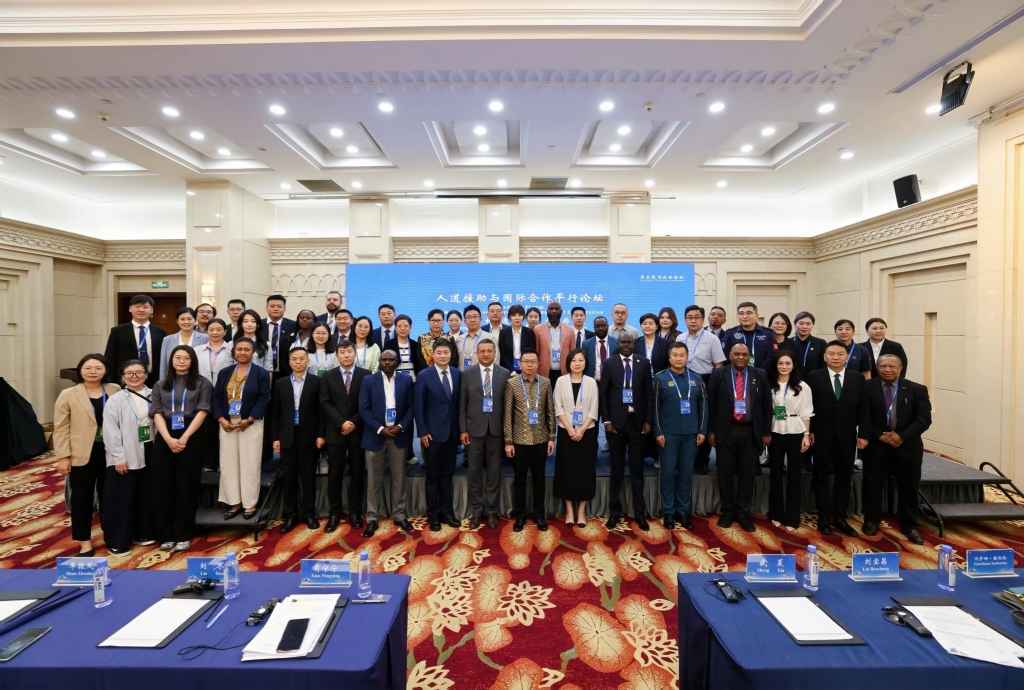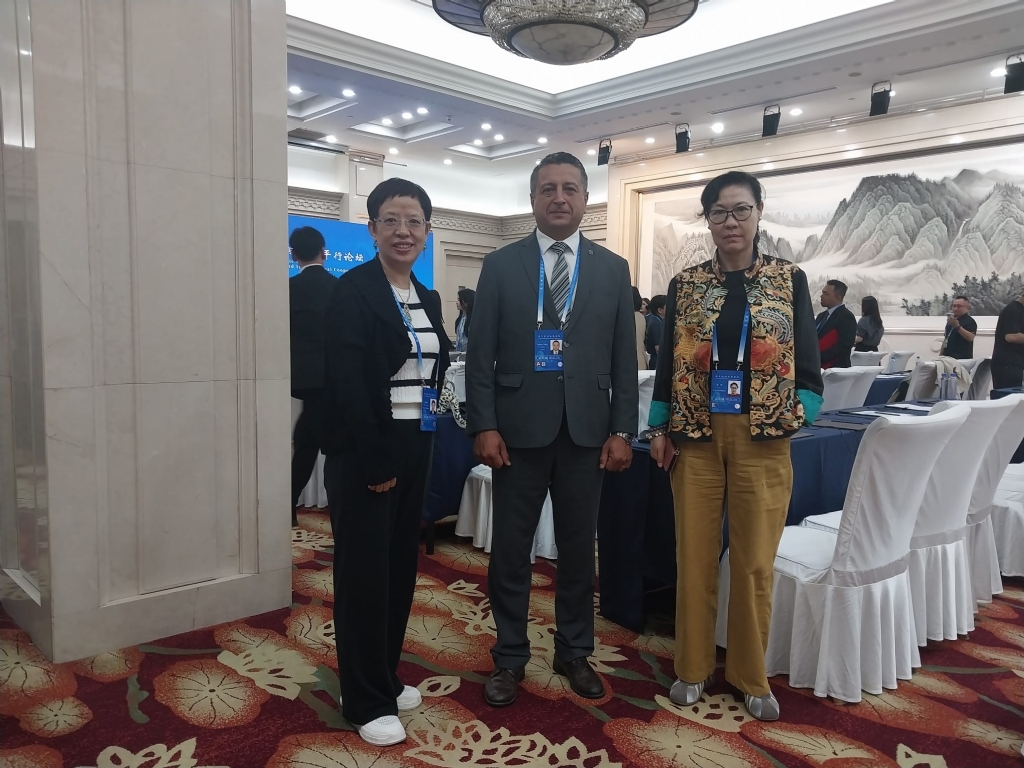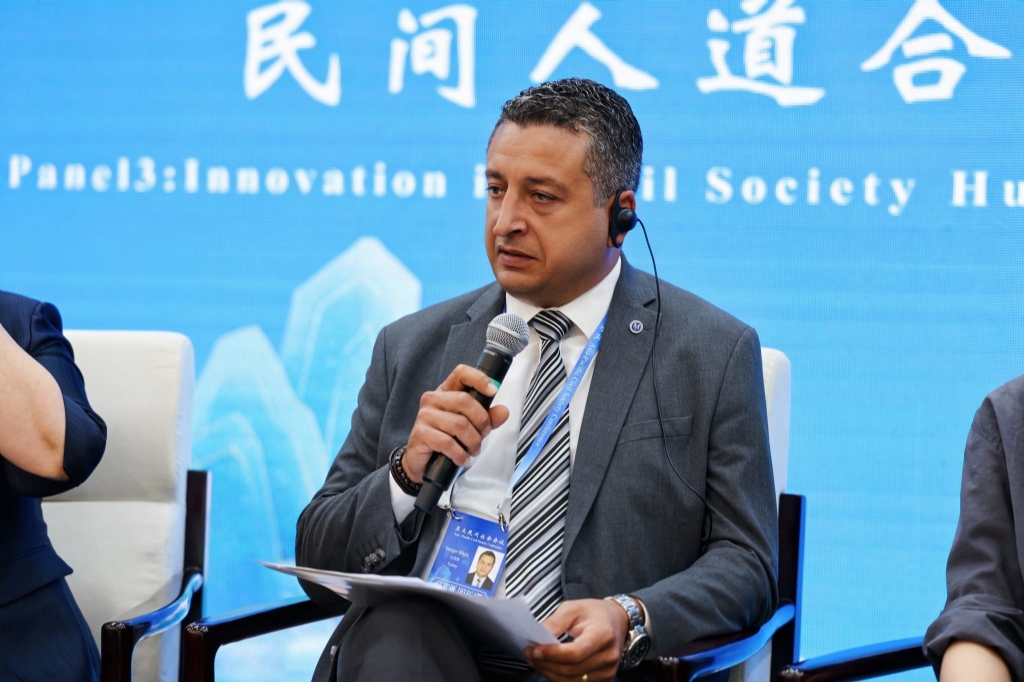
Mr. Sezgin Bilgiç, Secretary General of the Marmara Group Foundation, spoke at the international panel on "Humanitarian Aid and International Cooperation" organized by SIRONET in the People's Republic of China.
While in the People's Republic of China, Mr. Sezgin Bilgiç also visited the International Children's Aid Organization and received information about the institution from President Mrs. Li Lin.
The text of Mr. Sezgin Bilgiç's speech is provided below:
SPEECH TEXT OF SEZGIN BİLGİÇ, SECRETARY GENERAL OF THE MARMARA GROUP FOUNDATION
Mr. Chairman,
Distinguished Participants,
Ladies and Gentlemen,
First of all, on behalf of the Marmara Group Foundation and Turkish civil society, I would like to extend my respectful greetings to you all. It is a great honour for me to be here with you today and to share my thoughts under the theme of “Humanitarian Assistance and International Cooperation.”
Today, the world is confronted not only with humanitarian crises, but also with wars, natural disasters, climate change, migration, energy and food security challenges, new problems created by technology, and an ever-deepening crisis of trust.
All of these challenges teach us one very important lesson:
No country can any longer solve the common problems of our world on its own.
Humanitarian assistance is, of course, indispensable in times of crisis. However, nearly forty years of experience in civil society have shown us that it is not enough to act only after crises have already emerged.
What we truly need is:
dialogue before crises,
trust before crises,
and cooperation before crises.
The Marmara Group Foundation, with a history extending over forty years, is one of Türkiye’s leading civil society organisations.
For thirty years, through the Eurasian Economic Summits, we have brought together statesmen, politicians, diplomats, academics, representatives of the business community, religious leaders, opinion leaders, and civil society representatives from approximately fifty countries around the same table.
For thirty years, we have sought to create an independent platform for dialogue where representatives of very different political views, cultures, faiths, and civilisations can speak with one another.
And these thirty years of experience have taught us a very simple, yet extremely valuable truth:
People who think differently can still sit around the same table.
They can listen to one another. And they can seek common ground.
Of course, not every meeting results in an agreement. Not every disagreement can be resolved in a single meeting.
But the moment people begin to listen to one another, the first step towards a solution has already been taken.
It is precisely at this point that I believe civil society can assume a much more important role in international relations.
State diplomacy is indispensable.
Civil society cannot replace the responsibilities of governments, parliaments, or international organisations.
But civil society can create a different space alongside official diplomacy.
It can build trust between societies. It can bring people together beyond political differences. And even in periods when official channels face difficulties, it can help keep dialogue alive.
I would like to express this in the following way:
States negotiate agreements. Civil society helps create the atmosphere of trust that can make those agreements possible.
Dear Friends,
APEC is today one of the world’s most important platforms for economic cooperation.
One of the important reasons for APEC’s success is its ability to involve not only governments, but also different social and economic actors in its processes.
For example, there are strong institutional mechanisms through which the business community can contribute to the APEC process.
Today, I would like to raise a question:
If the business community has an institutional voice within the APEC process, why should international civil society not have a table of its own?
And I believe that today we should not limit ourselves merely to asking this question.
My proposal is this: Let us take the initiative, here today, to advance the idea of an APEC Civil Society Forum.
Of course, we are not in a position to make decisions on behalf of APEC. The establishment of such a structure would ultimately be a matter for APEC’s competent bodies.
But today, we can put this idea forward. We can embrace this vision together. And we can recommend to APEC the establishment of a Civil Society Forum, through which the voice of international civil society could be heard in a more systematic way.
Such a forum could initially begin as a side event within the framework of APEC meetings.
It could bring together respected international civil society organisations from around the world.
From peace and international dialogue to climate change; from artificial intelligence to sustainable development; from humanitarian crises to energy, water, and food security; and from the future of young people to intercultural and interfaith understanding, the common challenges of humanity could be addressed here from a broader perspective.
At the conclusion of each meeting, the shared views and recommendations of civil society could be presented to APEC’s leadership and to APEC Leaders.
In time, should APEC consider it appropriate, this forum could evolve into a more permanent and institutionalised consultative mechanism.
Let us begin this idea here today. Let us make this proposal heard within APEC together. Because this would not merely mean creating another meeting. It would mean giving civil society a stronger responsibility in international cooperation.
Nearly a century ago, Mustafa Kemal Atatürk, the founder of the Republic of Türkiye, left the world a very simple yet universal principle:
“Peace at Home, Peace in the World.”
Today, President Xi Jinping of the People’s Republic of China also emphasises the importance of addressing differences through dialogue and consultation, seeking common ground, and preserving harmony amid diversity.
Different eras, different geographies, different civilisations...
Yet, in terms of the future of humanity, the same fundamental understanding: The path to peace is through dialogue.
Dear Friends,
At this point, I would also like to place particular emphasis on Türkiye’s position.
Türkiye is not currently a member of APEC.
However, in my view, it is no longer sufficient to describe Türkiye merely as a geographical bridge between Europe and Asia.
Türkiye is an important economic, cultural, and political centre connecting Europe, the Black Sea, the Caucasus, Central Asia, the Middle East, and the Mediterranean.
It is a country where trade routes, energy corridors, logistics networks, and different civilisations intersect.
Türkiye has deep historical and cultural ties with Asia, just as it does with Euro
At a time when the centre of gravity of the global economy is increasingly shifting towards the Asia-Pacific region, I believe that stronger and more institutional relations between Türkiye and APEC would be valuable not only for Türkiye, but also for APEC and the wider Eurasian region.
Türkiye’s accumulated Eurasian experience can make an important contribution to dialogue between the Asia-Pacific region and Europe.
At this point, I would also like to emphasise that the efforts undertaken by the President of the Republic of Türkiye, Mr. Recep Tayyip Erdoğan, in support of peace and stability in our region provide guidance and inspiration for our own work. The path he has outlined is one that seeks to ensure the continuity and sustainability of peace.
As the Marmara Group Foundation, this is precisely what we have sought to achieve in the field of civil society through the Eurasian Economic Summits for the past thirty years:
bringing together
East and West,
Asia and Europe,.
different cultures and different ideas around the same table.
For this reason, I believe that building stronger ties between APEC and Türkiye, and enabling Türkiye to play a greater role in the APEC process in the future, would be of great importance.
Likewise, I believe that the APEC Civil Society Forum we are proposing should provide opportunities for dialogue not only to civil society organisations from APEC member economies, but also to respected civil society organisations from around the world that share APEC’s objectives and are capable of contributing to international cooperation.
Thirty years of experience through the Eurasian Economic Summits have taught us one thing:
Dialogue may not solve every problem immediately.
But without dialogue, no problem can be solved permanently.
Therefore, let us not leave here today with only fine words.
Let us launch an idea.
Let us open the way for civil society, with its ideas, experience, and contribution to dialogue, to participate more strongly in every platform.
I believe that the step we take today can become a valuable beginning not only for APEC, but also for international cooperation and for the shared future of humanity.
Thank you.
Gallery