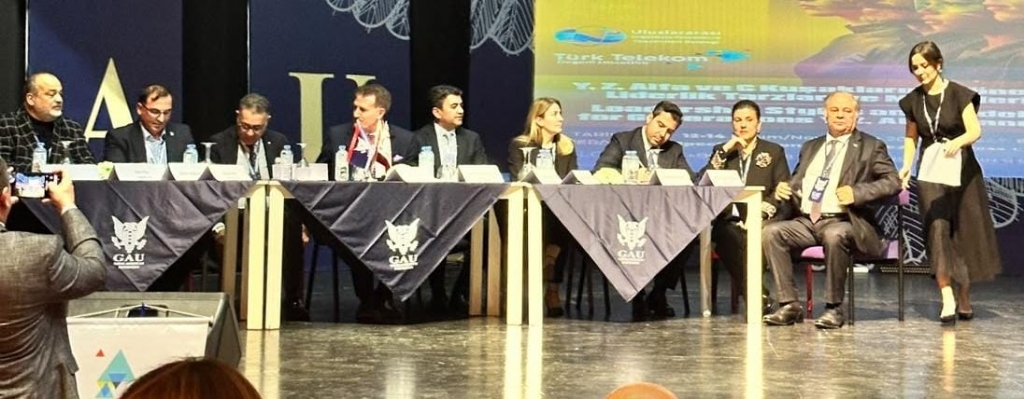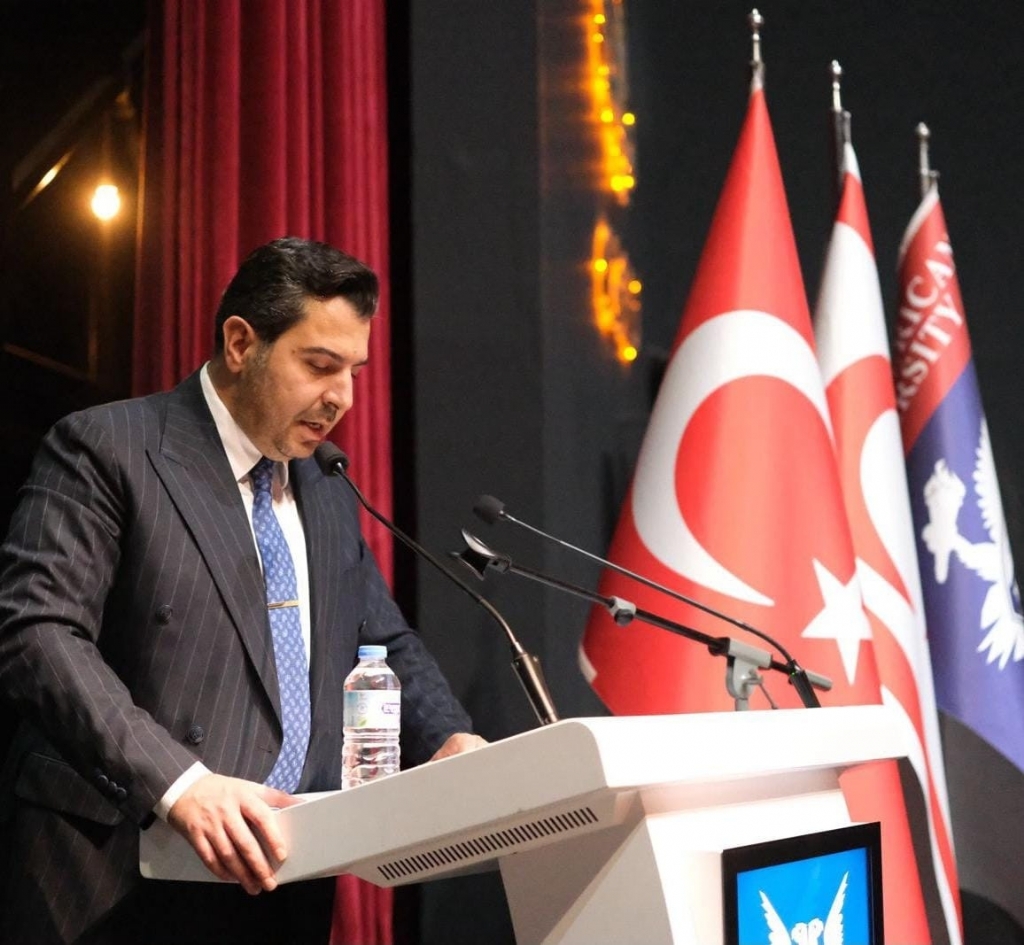
The 4th International Congress on the Management of Organizations took place in Cyprus. During the congress, a panel on management in non-governmental organizations (NGOs)—moderated by H. E. Yüksel Yalova, featured a presentation by Hon. Mr. Mustafa Ergin, a member of the Executive Council of the Marmara Group Foundation.
You can find the presentation delivered by Hon. Mr. Mustafa Ergin below:
PRESENTATION OF THE SPEECH TO BE DELIVERED BY DR. AKKAN SUVER, PRESIDENT OF THE MARMARA GROUP FOUNDATION, AT THE CIVIL SOCIETY PANEL HELD IN THE TRNC PRESENTED BY MUSTAFA ERGIN, MEMBER OF THE EXECUTIVE COUNCIL OF THE MARMARA GROUP FOUNDATION
Distinguished President, Esteemed Participants,
I would like to begin my remarks by respectfully greeting your distinguished assembly on behalf of the Marmara Group Foundation from Türkiye.
Today, I am here before you on behalf of Dr. Akkan Suver, President of our Marmara Group Foundation, of which I am a member of the Executive Council.
As he is unable to leave the ongoing COP31 meetings taking place in Türkiye, he could not join you at this wonderful gathering today.
With your kind permission, I would like to share with you the paper he was scheduled to present today.
Ladies and Gentlemen, Before discussing the management of civil society organisations in the present and future, I would like to share with your distinguished assembly that civil society movements based on volunteerism are, first and foremost, independent associations.
Precisely because they are independent, the fundamental principle in the decision-making processes of civil society management is to operate in accordance with the principles of openness, transparency, participation, accountability and pluralism.
Human beings can fulfil their innate desire to “be useful”, their need to devote themselves to a cause without expecting financial compensation, and their aspiration to add value to the society in which they live, through civil society organisations alone. Therefore, civil society organisations are institutions where a meaningful life and a sense of responsible citizenship are put into practice. Through civil society organisations, people experience the satisfaction of contributing something of value that makes a difference to their neighbourhood, city, country and, increasingly, the world.
I believe that humanity needs civil society organisations to operate in accordance with the principles of good governance. I also believe that civil society movements offer an opportunity to contribute to solving the world's problems. On the other hand, we also know that intergovernmental relations alone are not sufficient for countries to secure an influential and respected position in the world. In our age, when the influence of civil society is growing, relations between societies in the fields of commerce, science, culture, arts and intellectual thought have gained considerable importance. In other words, international relations are becoming increasingly “civil”, acquiring a non-state and non-governmental identity.
Meanwhile, drawing on the experience of many years, I can say that transparency and openness must take precedence in the management of civil society.
Another important issue is accountability within civil society organisations. In other words, it is important to justify the outcomes of their actions and the use of their resources to their members, donors, target groups and the public.
In the West, civil society is also referred to as the social economy.
The development, maturation and progress of a civil society organisation, as well as its achievement of a certain level of prestige, begin with its loyalty to its founding principles.
Participation is also important.
It is equally essential to seek the views not only of the management and a limited number of individuals, but also of members, volunteers and the communities receiving services.
Finally, respect for pluralism is necessary. Serving as a bridge through which the views and demands of different segments of society are conveyed to decision-making mechanisms is another important area of responsibility for civil society movements.
While encouraging the wider adoption of the concept of civil thought, it is essential to act in accordance with this understanding.
In line with this approach, civil society movements are obliged to constantly question themselves and strive for continuous improvement in matters of openness, transparency, participation, accountability, efficiency and effectiveness. They must also demonstrate active transparency regarding how they use their resources, both internally and towards their members and supporters.
Accountability to stakeholders, both through individual meetings with major supporters and through activity reports, is also of particular importance. Broad participation through such means as member meetings, Advisory Board meetings, ordinary general assemblies, surveys, expert groups and committees is equally important for sustainability.
As I conclude my remarks, I must emphasise in the strongest possible terms that civil society movements must never turn into political action.
Politics is conducted through political parties.
It is important to preserve the prestige of civil society thought, and this is only possible through impartial and voluntary service, as well as decisions and services free from prejudice.
Gallery